
After helping over 1,000 international students settle in Madrid, we’ve learned one thing: where you live matters more than you think. Your neighborhood shapes your daily commute, your social life, your budget, and — honestly — how much you enjoy your time in Spain.
Madrid is a city of distinct barrios, each with its own personality. The trendy bars and vintage shops of Malasaña feel like a different world from the leafy university streets of Moncloa. The multicultural energy of Lavapiés is nothing like the elegant cafés of Chamberí.
This guide breaks down the best neighborhoods in Madrid for students based on what actually matters: proximity to universities, rent prices, vibe, transport access, and nightlife. We’ll help you find the barrio that fits your study abroad lifestyle.
How Madrid’s Transport System Changes the Equation
Before we get into specific neighborhoods, an important point: Madrid’s public transport is excellent, and it changes how you should think about location.
The metro has 13 lines covering the entire city, buses run frequently, and the Cercanías commuter trains connect outer areas to the center. With a monthly Abono Joven (youth transport pass) at around €20 for anyone under 26, you get unlimited rides on all of it.
This means you don’t necessarily need to live next to your university. A 20–25 minute metro ride is perfectly normal, and it opens up neighborhoods that might be cheaper, more fun, or better suited to your personality. Think of proximity as a nice-to-have, not a dealbreaker.
The Best Neighborhoods, Ranked by Student Experience
Moncloa-Aravaca: The University District
If you’re studying at Universidad Complutense or Universidad Politécnica, Moncloa is the obvious choice — and for good reason. This is Madrid’s traditional university district, and everything about it caters to student life.
The area around Ciudad Universitaria feels like a campus town. You’ll find cheap menú del día restaurants (a three-course lunch for €10–€12), student-friendly bars, copy shops, and quiet spots in Parque del Oeste for studying outside when the weather’s good. The Faro de Moncloa observation tower gives panoramic views of the whole city — a fun outing when friends visit.
Rent is reasonable compared to the center: expect €400–€550 for a room in a shared apartment. The tradeoff is that Moncloa feels quieter at night than more central neighborhoods. If your social life revolves around going out in the center, you’ll be taking the metro home at 2 a.m. regularly. That said, the area has enough bars and terrazas to keep weeknights interesting.
Best for: Students at Complutense or Politécnica who want convenience, affordable rent, and an academic atmosphere with green spaces nearby.
Malasaña: Where the Nightlife Lives
Malasaña is the neighborhood students fall in love with. Centered around Plaza del Dos de Mayo, it’s a dense grid of narrow streets packed with independent coffee shops, vintage clothing stores, record shops, tattoo parlors, and some of the best bars in the city.
The nightlife here is legendary. Calle de la Palma and the streets around Plaza de San Ildefonso are lined with bars that range from craft beer spots to underground clubs. On weekends, the area buzzes until well past 3 a.m. — and since you’re already in the neighborhood, there’s no “how do I get home?” anxiety.
The flip side: Malasaña is central, popular, and therefore more expensive. Rooms in shared apartments typically run €500–€700, and studios start at €800+. Noise can also be an issue if your building faces a busy street — ask about this before signing a lease. On the other hand, you’re a 10-minute walk from Gran Vía, Sol, and basically the center of everything.
Best for: Creatively-minded students who prioritize nightlife, culture, and being in the thick of things — and can handle the higher rent.
La Latina: Tapas, History, and Sunday Markets
La Latina is where you go for the “real Madrid” experience. Narrow cobblestone streets wind between centuries-old buildings, and the area has some of the best tapas bars in the city. Cava Baja is basically a street-long tapas crawl, and Sunday mornings bring El Rastro — Madrid’s iconic flea market that fills the streets with vendors, musicians, and thousands of madrileños.
Living here means you’re surrounded by authentic Spanish culture rather than an international student bubble. That’s great for language immersion and for feeling like you’re actually part of the city. The area is also well-connected, sitting between the La Latina and Tirso de Molina metro stations.
Rent falls between Moncloa and Malasaña: €450–€600 for a room. The main downside is that La Latina is compact, so your apartment options might be smaller or in older buildings without modern renovations. But the character of the neighborhood more than compensates.
Best for: Students who want Spanish cultural immersion, great food around every corner, and a neighborhood with genuine local character.
Lavapiés: Multicultural, Affordable, and Full of Surprises
Lavapiés is Madrid’s most diverse neighborhood, and it shows in the best possible way. On a single block, you might pass an Indian restaurant, a Senegalese shop, a Chinese grocery, and a contemporary art gallery. It’s the kind of place where a tea house sits next to a flamenco tablao, and neither feels out of place.
For students, Lavapiés offers two major advantages: lower rent and cultural richness. Rooms in shared apartments run €350–€500, making it one of the most affordable central neighborhoods. You’re also walking distance from Atocha station, Retiro Park, and the Reina Sofía museum.
The neighborhood has gentrified significantly in recent years, bringing new coffee shops, art spaces, and co-working spots alongside the long-established international businesses. It’s a neighborhood in transition, and that energy can feel exciting. However, some streets can feel rougher at night compared to Malasaña or Chamberí — it’s improving, but worth noting.
Best for: Budget-conscious students who value diversity, art, and authentic experiences over polish.
Chamberí: The Quiet Achiever
Chamberí doesn’t get mentioned as often as Malasaña or Moncloa in student guides, but it deserves a spot on your shortlist. This is a residential neighborhood with tree-lined streets, elegant old buildings, excellent bakeries, and a calmer pace of life than the center. Think of it as the neighborhood where young professionals and professors live — it’s grown-up without being boring.
The area around Iglesia and Bilbao metro stations has plenty of restaurants and bars, but they tend to be more relaxed sit-down places than loud nightlife spots. Mercado de Vallehermoso is a modern food market worth regular visits. And you’re just one metro stop from the energy of Malasaña if you want it.
Rent sits in the €450–€650 range for a room. Chamberí offers a good balance: central enough to walk or bike to most things, but quiet enough to actually sleep and study.
Best for: Students who want a more residential, “actually living in Madrid” experience — especially if your program demands serious study time.
Other Neighborhoods Worth Knowing About
Salamanca: Madrid’s upscale district. Beautiful architecture, high-end shopping, and excellent restaurants — but rents start at €600+ for a room and the vibe leans more professionals than students. Worth considering if you’re studying at IE University, which is in the area.
Chueca: Adjacent to Malasaña and equally central, Chueca is Madrid’s LGBTQ+ neighborhood with a vibrant bar and restaurant scene. Rent is similar to Malasaña (€500–€700), and you’re within walking distance of Retiro Park.
Argüelles: Right next to Moncloa with similar prices and convenience, but a slightly more local, less “student district” feel. Good option if Moncloa itself is fully booked.
| Neighborhood | Vibe | Room in Shared Apt. | Best For | Main Trade-off |
|---|---|---|---|---|
| Moncloa-Aravaca | Academic, green, campus feel | €400–€550 | Complutense/Politécnica students | Quieter nightlife |
| Malasaña | Bohemian, social, trendy | €500–€700 | Nightlife lovers, creatives | Higher rent, street noise |
| La Latina | Traditional, foodie, historic | €450–€600 | Cultural immersion seekers | Older, smaller apartments |
| Lavapiés | Multicultural, artsy, gritty | €350–€500 | Budget-conscious, adventurous types | Rougher feel on some streets |
| Chamberí | Residential, calm, elegant | €450–€650 | Serious studiers, young professional vibe | Less “student energy” |
Finding Housing: Types, Costs, and Tips
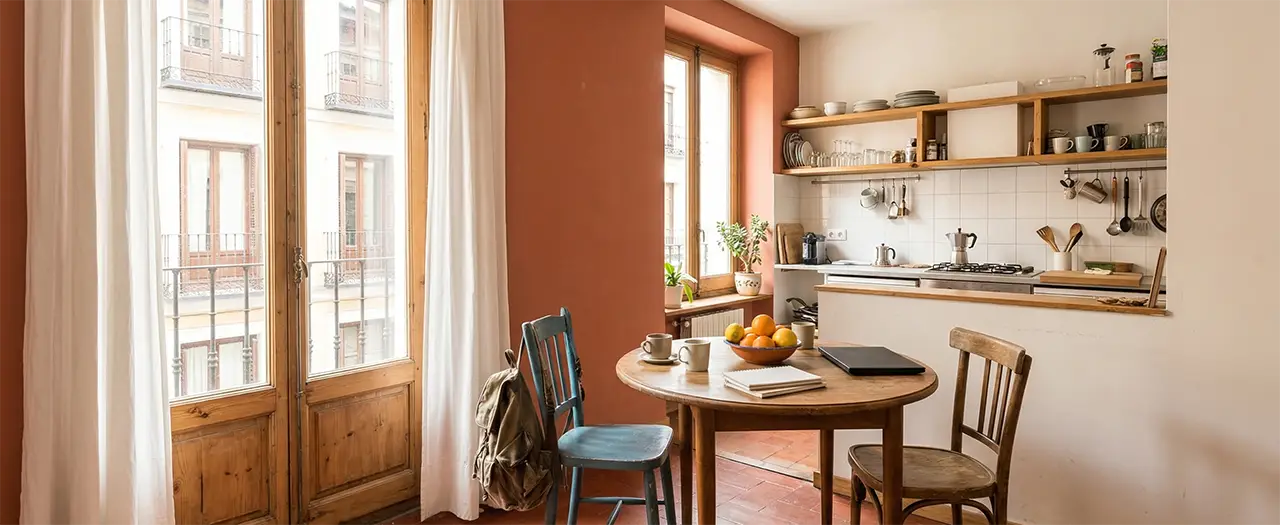
Once you’ve picked a neighborhood (or narrowed it to two or three), you need to actually find a place. Here are your main options:
Shared Apartments (Pisos Compartidos)
This is how most students live in Madrid. You rent a room in an apartment shared with 2–4 other people. Rent includes your private bedroom; you share the kitchen, bathroom, and living areas. It’s the most affordable option and a built-in way to meet people. Platforms like Idealista, Badi, and Spotahome are the main search tools.
One tip: if possible, visit the apartment in person before signing anything. Photos don’t always tell the full story, especially regarding noise, natural light, and the general state of the building.
Student Residences
All-inclusive living with meals, cleaning, and often study rooms and social events. Prices are higher — typically €800–€1,300 per month — but you’re trading money for convenience and community. Residences work well for first-semester students who want a ready-made social network while they figure out the city.
Private Studios
Full independence in your own space, but at a premium: €700–€1,000+ per month depending on the neighborhood. This option makes sense if you need quiet for intensive study or if you’re staying longer than one semester and want your own place.
Homestays
Living with a Spanish family — usually a room with meals included — costs €500–€700 per month and offers deep cultural immersion. Your Spanish will improve dramatically, and you’ll experience daily life in a way that’s hard to replicate in a shared student apartment. It’s not for everyone (less independence, house rules), but students who choose this option often say it was the highlight of their time abroad.
Budget Reality Check
Whatever you’re paying in rent, budget an extra €100–€200 per month for utilities (electricity, gas, water), Wi-Fi, and community charges (gastos de comunidad) that may or may not be included in your lease. Always clarify what’s included before signing — “gastos incluidos” means all-in; if that phrase isn’t there, ask.
Making the Right Choice for You
There’s no single “best” neighborhood — it depends on your priorities. Here’s a quick framework:
If budget is your top concern: Look at Lavapiés or Moncloa first. Both offer affordable rent in central-ish locations with good transport.
If social life is the priority: Malasaña or La Latina put you where things happen. You’ll spend less on taxis and more time with friends.
If you need quiet to study: Chamberí gives you peace with proximity. It’s a metro stop from the action but a world away in terms of noise.
If commute time matters most: Pick the neighborhood closest to your university. For Complutense and Politécnica, that’s Moncloa. For IE, look at Salamanca. For other institutions, map the metro lines and work backwards.
Not sure which neighborhood is right for you? At Inbound Students, we help international students find accommodation in Madrid’s best areas. With 10+ years of experience, we know these barrios inside out and can match you to a neighborhood and housing type that fits your budget, your university, and your personality. Talk to our team.
Related guides you might find useful:
Conclusion
Your neighborhood is the backdrop to everything you’ll experience in Madrid — your morning coffee, your commute, your Friday nights, and the small daily moments that make a semester abroad feel like real life rather than a long vacation. Take the time to choose well.
Visit a few barrios if you can, even if it’s just a walk-through during your first days. The feel of a street at 8 p.m. on a Tuesday will tell you more than any article can. And if you’re arriving sight unseen, lean on the descriptions above and the data in the comparison table — they’re based on placing hundreds of students in exactly this situation.
FAQ
What is the most popular neighborhood for university students in Madrid?
Moncloa-Aravaca is the traditional student hub — it’s home to Complutense and Politécnica and has the infrastructure to match (cheap lunch spots, student bars, study-friendly cafés). However, Malasaña and Lavapiés are increasingly popular with international students who want a more central, socially active experience.
How much does a room in a shared apartment cost in Madrid?
Expect to pay between €350 and €700 per month depending on the neighborhood. Lavapiés and Moncloa are on the lower end; Malasaña and Chamberí are higher. Budget an additional €100–€200 for utilities and Wi-Fi if they’re not included in the rent.
Is public transport reliable enough to live far from my university?
Absolutely. Madrid’s metro, bus, and Cercanías network is extensive and punctual. With the Abono Joven pass (~€20/month for under-26s), you get unlimited rides. A 20-minute commute is considered normal and opens up neighborhoods that might be cheaper or better suited to your lifestyle.
Which neighborhood has the best nightlife for students?
Malasaña is the go-to for bar-hopping, live music, and late-night culture. La Latina is excellent for tapas-focused evenings, especially on Sundays after El Rastro market. Lavapiés has a growing scene of quirky bars and cultural spaces. If you’re looking for larger clubs, the Huertas and Sol areas (walking distance from all three neighborhoods) are where you’ll find them.
What hidden costs should I watch for when renting in Madrid?
The main ones are utilities (electricity, gas, water), Wi-Fi, and community charges — which may or may not be included in your monthly rent. Always ask whether “gastos incluidos” applies. Some landlords also charge an agency fee (usually one month’s rent) and a security deposit (one to two months). Factor these into your arrival budget.