
One of the first things you should sort out before arriving in Spain is mobile connectivity. Your home carrier’s roaming fees can easily hit $10–$15 per day, and you’ll need reliable data from the moment you land — for maps, WhatsApp, translation apps, and accessing your university portal.
The good news: Spain’s prepaid market is competitive, with plans starting around €10/month that include 50–90GB of data, unlimited national calls, and EU roaming. No contracts, no commitments. And if your phone supports it, an eSIM lets you set everything up before you even board your flight.
This guide compares your options, walks through activation, and explains why most students we work with are choosing eSIM over a traditional SIM card.
Why eSIM Is the Best Option for Students Coming to Spain
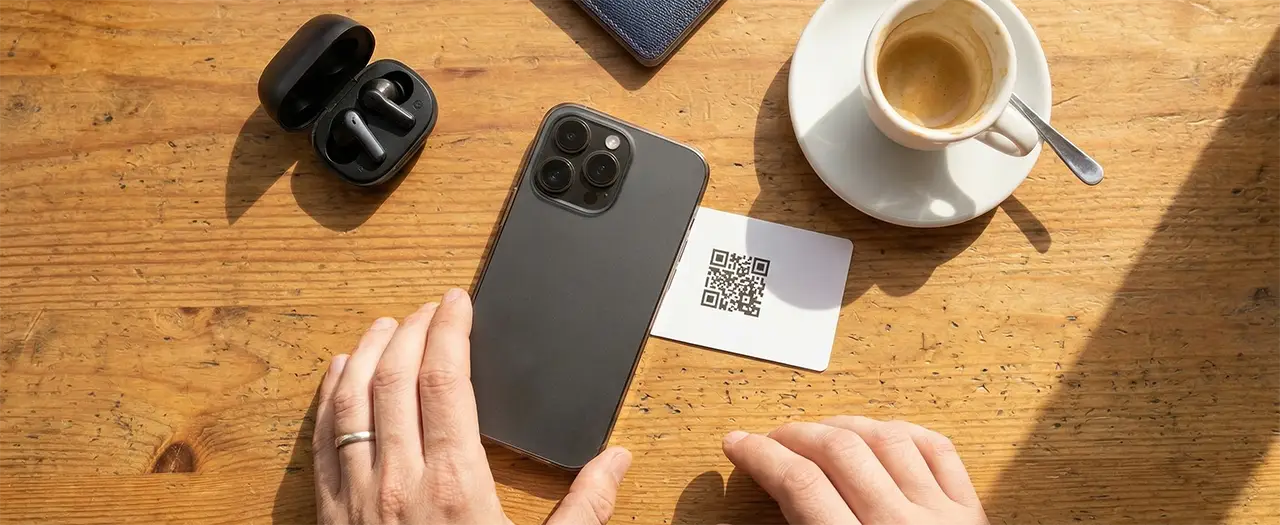
If you’ve never heard of an eSIM, the concept is simple: it’s a digital SIM card embedded in your phone. Instead of swapping a tiny plastic chip, you scan a QR code and your plan activates instantly. No delivery wait, no hunting for a phone shop at the airport, no fiddling with SIM trays.
For students, the advantages are practical and immediate:
Set up before you travel. You can purchase and install your Spanish eSIM while still at home. The moment your plane lands and you turn off airplane mode, you’re connected. That means access to maps, your accommodation address, and a way to message your family — all before you clear customs.
Keep your home number active. Most modern phones support dual SIM, meaning your eSIM handles Spanish data and calls while your original SIM stays active for receiving messages from home. No need to choose one or the other.
Nothing to lose or break. Physical SIM cards are small and easy to misplace, especially when you’re juggling luggage, documents, and a new city. An eSIM lives inside your phone’s software — there’s nothing to drop or damage.
Switch plans easily. If you want to change providers or upgrade your data allowance, the process is digital. No store visit required.
| Feature | Physical SIM | eSIM |
|---|---|---|
| Setup | Insert card into SIM tray | Scan QR code — done in minutes |
| When you can activate | After arrival (store or delivery) | Before you leave home |
| Risk of loss or damage | Easy to lose the tiny card | No physical component |
| Dual number setup | Requires a dual-SIM phone with two slots | Works alongside your existing SIM |
| Switching providers | Need a new physical card | Digital switch, no store visit |
| Device compatibility | Works with all phones | Requires eSIM-compatible phone (2019+) |
Is Your Phone eSIM-Compatible?
Most smartphones released from 2019 onward support eSIM. That includes iPhone XS and later, Google Pixel 3 and later, and Samsung Galaxy S20 and newer. A quick way to check: open your phone’s settings and search for “eSIM,” or dial *#06# — if an EID number appears, your device supports it.
If your phone doesn’t support eSIM, don’t worry. A physical prepaid SIM is still an excellent option, and we cover those below.
Best eSIM and Prepaid SIM Plans for Students in Spain
Spain’s telecom market is dominated by three networks: Vodafone, Movistar, and Orange (Yoigo runs on Orange’s network). All three have strong 4G/5G coverage across the country, including rural areas you might explore on weekend trips.
Here’s how the main prepaid options compare for a student staying one semester or longer:
Top Prepaid Plans at a Glance
| Provider | Plan | Price | Data | Calls | eSIM Available? |
|---|---|---|---|---|---|
| Vodafone | Prepago S | €10/28 days | 90GB (5G) | Unlimited national + 500 int’l min | Yes |
| Movistar | Prepaid Plus | €10/28 days | 50GB | Unlimited national | Yes |
| Movistar | Total Prepaid | €20/28 days | 175GB | Unlimited national + int’l options | Yes |
| Yoigo | Prepaid €15 | €15/28 days | 50GB | Unlimited national | Yes |
Need an eSIM for your time in Spain? Inbound Students now offers eSIM service for international students — quick activation, competitive pricing, and support if you need help setting things up. Get in touch to learn more.
Vodafone’s Prepago S is hard to beat for value: 90GB of 5G data, unlimited domestic calls, and 500 international minutes for €10. It also includes EU roaming, which matters if you’re planning weekend trips to Portugal, France, or Italy.
Movistar’s €10 plan offers 50GB with solid nationwide coverage and no-contract flexibility. If you stream a lot or use your phone as a hotspot, their €20 tier bumps you to 175GB.
Yoigo sits in the middle at €15 for 50GB. One useful perk: if you burn through your data allowance, your connection drops to reduced speed rather than cutting off entirely.
All three providers now offer eSIM activation. Vodafone’s is fully digital and instant; Movistar and Yoigo process eSIM requests online with QR codes delivered within hours.
International eSIM Providers Worth Considering
If you want to skip the Spanish carrier setup entirely, international eSIM providers like Airalo, Holafly, and Saily offer Spain-specific data plans you can buy from anywhere in the world. These are typically data-only (no Spanish phone number), but they’re perfect if you mostly use WhatsApp and other VoIP apps for calls.
Plans start as low as €4–$5 for a few gigabytes, scaling up to unlimited data options. The tradeoff: you won’t have a local number for signing up to Spanish services like banking apps. For a longer stay, a Spanish carrier plan with a local number is usually the better choice.
How to Get a Local SIM or eSIM When You Arrive
If you go with a physical SIM, you have two routes: buying at the airport or heading to a carrier store in the city. Airport kiosks are convenient but often charge a premium. City-center shops from Vodafone, Movistar, or Yoigo offer better deals, and the staff can help with setup.
Whichever route you choose, bring your passport. Spanish law requires identity verification for any SIM purchase — this applies to both physical and eSIM activations.
Activation Step by Step
For eSIM: Purchase your plan online through the carrier’s website or app. You’ll receive a QR code by email. Go to your phone’s settings, select “Add eSIM” (or “Add cellular plan”), and scan the code. Your Spanish line will appear alongside your home number. Total time: about five minutes.
For physical SIM: Insert the card into your phone’s SIM tray. Most carriers activate automatically once the card connects to the network. If needed, you may have to enter APN settings (the carrier provides these). To find your new Spanish number, dial *138# and press call.
How Pricing Works: What You Actually Pay
Spanish prepaid plans are refreshingly transparent. Here’s what to know:
The SIM card itself (or eSIM activation) is usually free. Your first plan starts at €10, and that price covers everything — data, calls, and EU roaming. No hidden fees, no activation charges.
Plans renew every 28 days, not monthly. If you have credit loaded, they renew automatically. If your balance runs out, the service simply pauses — no overdraft charges or surprise bills. You top up when you’re ready.
Most carriers offer data rollover: unused gigabytes carry forward for up to three consecutive periods. So if you use less data one month (thanks to campus Wi-Fi), those gigabytes don’t go to waste.
Tips to Stretch Your Data and Avoid Extra Costs
Even with generous data allowances, a few habits will keep your usage efficient:
Download your carrier’s app right after activation. Vodafone’s “My Vodafone” app, for example, shows real-time data usage, lets you top up instantly, and sends alerts when you’re approaching your limit.
Use campus Wi-Fi for heavy tasks. Streaming lectures, downloading readings, and video calls eat through mobile data fast. Save your mobile allowance for when you’re out exploring.
Enable data-saving modes. Most apps — including Google Maps, Spotify, and Netflix — let you download content over Wi-Fi for offline use. Maps are especially worth downloading before a weekend trip.
Set usage alerts at 50%, 75%, and 90% of your data limit. This avoids the unpleasant surprise of running out mid-week.
If you do run low on data before your 28-day cycle ends, most carriers let you purchase a small top-up package through their app. And if you need help, Vodafone offers customer support via WhatsApp at 600 100 800 — handy when you’d rather text than call.
| Strategy | How It Helps | Best For |
|---|---|---|
| Carrier app tracking | See exactly how much data you’ve used and what’s left | Daily awareness |
| Wi-Fi-first approach | Reserve mobile data for when you’re out and about | Lecture streaming, big downloads |
| Offline downloads | Maps and media available without any connection | Weekend travel |
| Instant top-up | Add credit in minutes via app, website, or international card | Mid-cycle data shortfalls |
Local SIM vs. International Roaming: Why Local Always Wins
Some students arrive thinking they’ll just use their home carrier’s international roaming and sort out a local plan “later.” In practice, this tends to go poorly. Roaming charges from carriers outside the EU can add up to $10–$15 per day, and data caps are often restrictive (sometimes as low as 500MB/day before throttling).
A local prepaid plan gives you 50–90GB of fast data for what roaming charges in a single day. You also get a Spanish phone number, which you’ll need for practical things like signing a rental contract, opening a bank account, setting up utility apps, and receiving university alerts.
The money you save on roaming can easily fund a weekend trip to Seville or a few nights of tapas in your new neighborhood. It’s one of the simplest financial decisions you’ll make during your semester abroad.
Need an eSIM for your time in Spain? Inbound Students now offers eSIM service for international students — quick activation, competitive pricing, and support if you need help setting things up. Get in touch to learn more.
Just arriving in Spain? Getting connected is just one of many things to sort out. Inbound Students helps with the full package — airport pickup, accommodation, health insurance, and settling-in support. Contact us to plan your arrival.
Related guides you might find useful:
Conclusion
Staying connected in Spain doesn’t need to be complicated or expensive. For most students, an eSIM is the simplest path: buy it before you travel, scan a QR code, and you’re online the moment you land. If your phone doesn’t support eSIM, a physical prepaid SIM from any of the major carriers will serve you well for €10–€15 a month.
Whichever option you choose, a local plan beats international roaming in every way that matters — price, data allowance, and having a Spanish number for daily life. Set it up early, download your carrier’s app, and you’ll have one less thing to worry about as you settle into your new city.
FAQ
Should I get an eSIM or a physical SIM card for Spain?
If your phone supports eSIM (most models from 2019 onward do), go with eSIM. You can set it up before traveling, it activates instantly, and you can keep your home number active at the same time. A physical SIM works fine too — it’s just less convenient since you need to buy it after arriving and swap cards.
Which Spanish carrier offers the best value for students?
Vodafone’s Prepago S plan stands out at €10 for 90GB of 5G data, unlimited national calls, 500 international minutes, and EU roaming. Movistar and Yoigo are also solid options, especially if coverage in a specific area matters to you. All three offer eSIM activation.
Can I set up a Spanish phone plan before I arrive?
Yes, if you choose an eSIM. You can purchase and install it from your home country. The plan activates when your phone connects to a Spanish network after landing. For physical SIM cards, you’ll need to buy one after arrival — either at the airport or a carrier store.
Do I need a Spanish phone number, or is data-only enough?
For a short trip, data-only might be enough since you can use WhatsApp and other VoIP apps. But for a full semester, a Spanish number is important — you’ll need it for opening a bank account, signing a rental contract, receiving university messages, and registering for local services.
What happens if I run out of data before my plan renews?
With most Spanish carriers, your service pauses or drops to very low speed — you won’t get surprise charges. You can buy a small data top-up through the carrier’s app at any time. Some providers like Yoigo keep your connection active at reduced speed rather than cutting off entirely.
Does EU roaming really work with a Spanish prepaid plan?
Yes. Under EU regulations, Spanish prepaid plans include roaming in other EU countries at no extra cost. You can use your Spanish data and minutes in France, Portugal, Germany, Italy, and other EU destinations during semester breaks. Fair-use policies may apply to extended stays outside Spain.