
This guide walks you through the full process: when and where to apply, what documents you need, the appointment system (cita previa), and practical tips to avoid the most common headaches.
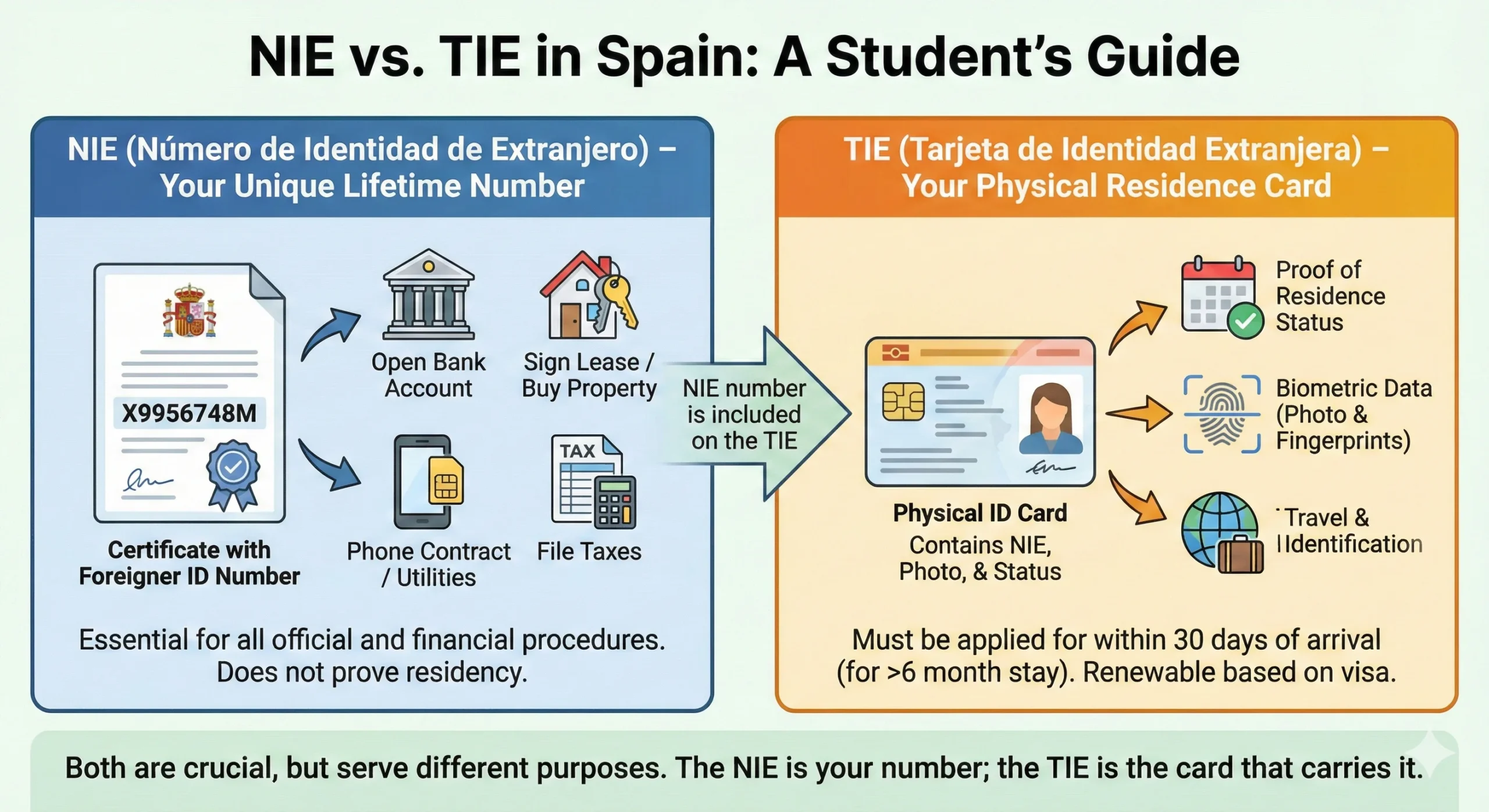
Your TIE (Tarjeta de Identidad Extranjera) is the physical ID card that contains your NIE, your photo, and your residence status. Non-EU students staying longer than 6 months must apply within 30 days of arrival.
Your NIE (Número de Identidad de Extranjero) is your foreigner identification number — a unique code (like X9956748M) that you keep for life. You need it for everything: opening a bank account, signing a lease, getting a phone contract, filing taxes.
Two acronyms you’ll hear constantly as a student in Spain: NIE and TIE. They sound similar but serve different purposes — and you need to understand both.
Understanding What is NIE Number Spain and Its Importance
For all non-Spanish nationals, securing a unique administrative identifier is the first step to unlocking life in the country.
This exclusive personal code, called the Foreigner Identification Number, is issued by the General Directorate of the Police.
Definition and Core Functions
It follows a specific format: a letter like X, then seven digits, and a final control character. For example, X9956748M.
This identifier is assigned once and remains yours for life. It does not change with your visa or residency status.
Remember, it is not a physical ID card. You must always show your passport alongside this essential number.
The Role of the NIE in Everyday Transactions
You need this code for nearly all official and financial procedures. It acts as your tax identification number for all fiscal matters.
Daily activities like opening a bank account, signing a rental lease, or buying property require it. Setting up utilities, getting a mobile phone contract, and registering for healthcare also depend on this identifier.
Without it, engaging in these transactions is not possible. This administrative code is distinct from the DNI used by Spanish citizens.
Why Foreigners, Especially Americans, Need an NIE
This identifier is not just a formality; it’s the essential key that opens doors to legal, financial, and daily life in the country. For American citizens and other non-EU nationals planning a longer stay, securing it is mandatory.
Legal and Fiscal Requirements
You must apply for this code if staying beyond a short tourist visit. It acts as your official tax identification number for filing returns and paying income or property taxes.
It’s crucial to understand that having this code does not grant legal residency status. However, you cannot apply for a residency permit or visa without it.
Benefits for Students and Expats
This unique number unlocks critical services and opportunities. The table below highlights common scenarios where it is required.
| For Students | For Expats & Professionals |
|---|---|
| Enrolling in a university or school program. | Purchasing or selling real estate or a vehicle. |
| Opening a local bank account for tuition or stipends. | Signing an employment contract or working freelance. |
| Renting an apartment and setting up utilities. | Obtaining a Spanish driver’s license. |
| Accessing student healthcare services. | Registering for social security and comprehensive insurance. |
Remember, you need to initiate the application within 90 days of arrival. This step ensures compliance and smooth access to everything you’ll need.
Step-by-Step Guide to Obtaining Your NIE/TIE
The journey to getting your official Spanish ID involves specific actions, deadlines, and strategic choices. This guide walks you through the key stages.
When and Where to Apply
You have two main options to get nie documentation. Apply before traveling via your local Spanish consulate. Or, start the application after arrival at an oficina extranjeros or designated police station.
Critical deadlines govern this process. You must submit your request within 90 days of moving. Non-EU students here over 180 days must apply nie for a TIE card within 30 days of arrival.
Booking an appointment online (cita previa) is mandatory. Slots fill fast. Check the system early Monday mornings when new appointment times often open. If your city’s oficina extranjeros is full, try smaller towns nearby.
| Application Pathway | Key Steps | Typical Processing Time |
|---|---|---|
| Before Arrival (Consulate) | Schedule consular appointment, submit forms and documents. | About 2 weeks |
| After Arrival (Immigration Office) | Book cita previa in Spain, attend in-person submission. | 1 to 2 months |
| For Non-EU Students (TIE) | Apply at local office within 30 days of arrival. | 1 to 3 months |
Using a Power of Attorney for Easier Processing
The simplest way to get nie is to authorize a Spanish lawyer. Grant them power of attorney with a notarized document.
They handle the entire process for you. This saves time and avoids the hassle of securing an application slot yourself.
Remember, if you get a student visa beforehand, your identifier is assigned automatically. No separate apply nie step is needed.
Key Documents and Application Forms for Your NIE and TIE
A complete and organized file of required documents is the backbone of a successful application. Having everything ready prevents frustrating delays.
Officials will need to verify your identity and purpose for staying. Let’s break down the essential papers you must gather.
Essential Documents: Passport, Photos, and Certificates
For your NIE request, prepare this core set:
- A valid passport and a copy of its biometric data page.
- Two recent passport-sized photos.
- The completed EX-15 application form.
- An empadronamiento certificate from your local town hall.
- Paid Form 790 código 12.
The empadronamiento proves your local address. Register at your municipality’s office to get this certificate.
Understanding Forms EX-15 and 790
The EX-15 is the official nie application form. Download it from consulate or police websites. Fill in your personal data and reason for requesting the identifier.
Form 790 is the payment slip for the administrative tax. Complete it online, pay at a designated bank, and attach the receipt.
Non-EU students applying for a TIE card need extra items. These include a printed appointment confirmation, a passport stamp copy, the EX-17 form, and a school acceptance letter.
Always bring original documents and their copies. Double-check with your local office for any specific requirements.
Include a short written statement in Spanish explaining your need, like “to study.” Organizing your file perfectly avoids common pitfalls like missing signatures.
Navigating Administrative Processes: Bank Accounts, Taxes, and Residency
This unique identifier becomes your key to managing finances, taxes, and legal status. Once you have it, you can tackle essential procedures for living in Spain.
Opening a Spanish Bank Account with Your NIE
To open a bank account, you’ll need your certificate. First, choose a bank and schedule an appointment.
Bring these documents:
- Your official identifier certificate.
- A valid passport.
- Proof of your local address.
Financial institutions require this code by law. It serves as your tax identification for all reporting.
Tax and Property Considerations for Foreign Residents
For tax purposes, this code functions as your official NIF. You’ll use it to file returns and pay income or property tax (IBI).
It is absolutely mandatory for any real estate transaction. You cannot sign a purchase agreement or register property without it.
While the code itself doesn’t grant legal status, it’s required for all residency applications. This includes registration in the central foreigners’ register.
For non-EU citizens, it’s crucial for visa renewals. It connects your financial, legal, and residential life seamlessly.
Practical Tips for a Smooth Application Process
A smooth application experience hinges on two key factors: securing your slot and perfecting your paperwork. Smart strategies here save you significant time and frustration.
Efficient Appointment Booking Strategies
The online booking platform, called cita previa, fills up fast. New slots often release on Monday mornings. Log in then and refresh your browser frequently.
Be flexible with dates and locations. If appointments in major cities are gone, try a police station in a smaller nearby town.
For the TIE card, consider booking your appointment online before you even arrive. This ensures you meet the tight 30-days deadline.
Organizing Your File to Avoid Common Pitfalls
Start your nie application process at least two months before you need the document. Processing time can be long.
Create a dedicated folder. Place all original documents in one section and their photocopies in another. Keep forms signed and payment receipts on top.
If the procedure feels complex, hiring a local professional can be a wise investment. They handle the entire application for you.
Double-check all personal information and signatures. Arrive early for your appointment with everything in order. Keep digital copies of all submitted information for your records.
Need help with your NIE/TIE paperwork? Inbound Students guides you through the bureaucratic process step by step — from booking your appointment to preparing your documents. We’ve done this over 1,000 times. Let us help
Conclusion
With this crucial documentation secured, you can fully embrace your new chapter in Europe. Your unique identification number serves as the permanent gateway for all administrative and financial procedures.
Remember, this lifetime identifier never expires. The physical card, however, may need renewal based on your visa status.
While the process requires patience, it’s an essential one-time step. Start early, organize your documents methodically, and verify requirements with official sources.
This guide provides the roadmap, but individual circumstances for American citizens and other foreigners can vary slightly.
Keep your official certificate safe and make copies. You’ll need it for opening accounts, tax matters, and property transactions.
Once obtained, you’re equipped to establish your residency and enjoy everything the country offers. Millions navigate this successfully each year—you can too.
FAQ
What exactly is the NIE and how do I use it?
Your NIE is a personal tax identification number for foreigners in Spain. It’s essential for official procedures like signing a work contract, purchasing property, or filing taxes. Think of it as your fiscal ID for all legal and financial transactions in the country.
Why is obtaining this identification number so important for Americans?
United States citizens need it to comply with Spanish law for key activities. Without it, you cannot open a local bank account with entities like Banco Santander, pay taxes, or finalize a property purchase. It’s the first step to establishing your legal and economic footprint here.
What’s the difference between the NIE and the TIE card?
The NIE is simply the number itself, issued on a certificate. The TIE is the physical residency card that contains your NIE, photo, and biometric data. Non-EU citizens staying longer than six months must apply for the TIE card at the *Oficina de Extranjería* after obtaining their number.
Which forms are required for the application process?
The primary form is the EX-15 for the NIE certificate. You must also complete Form 790 (code 012) to pay the associated tax fee. These documents, along with your passport and proof of why you need the number, form the core of your submission.
Can I authorize someone else to handle this procedure for me?
A> Yes, using a power of attorney is a common and efficient strategy. You can grant authorization to a trusted representative or a specialized gestoría to submit your documents and collect your certificate, saving you a trip if you are not yet in the country.
How does this identification help with opening a bank account?
Spanish banks legally require a NIE to open a personal account. It links your financial activity directly to the Spanish tax agency. Presenting your NIE certificate and passport at a branch like BBVA or CaixaBank is a standard part of their verification process.
What are the best tips for a smooth application?
Book your police station or extranjería appointment online as early as possible. Organize your file meticulously with original documents, copies, and proof of payment for Form 790. Double-check that all forms are signed and your passport is valid to avoid delays.